
Door Interlocking Systems
Door interlocking enforces safe traffic through airlocks, buffer corridors, and classified rooms so that only one approved door is released at a time—never an unsafe combination that would break a pressure cascade or let two opposing paths stand open together. Installations usually pair electromagnetic locks or electric strikes with dependable door-position feedback, timed unlock windows, and emergency or fire inputs that follow your site’s safety rules rather than a one-size-fits-all bypass. Visual and audible indicators help guards and staff see at a glance which door is waiting, which is released, and when a forced or prolonged-open condition needs attention. The same ideas apply wherever contamination control matters—pharmaceutical suites, laboratories, cleanrooms, and critical healthcare zones—because controlled sequencing cuts both security risk and the chance of airflow or particulate carry-over between sides of a barrier. Larger vestibules can be handled with multi-door controllers from a single panel: configurable interlock matrices, switch-based or switchless modes where appropriate, and room for access switches, status LEDs, buzzers, and BMS or AHU signalling so building systems stay aligned with who is allowed through, and when. Commissioning-friendly interfaces (such as USB for parameter setup, with Ethernet or serial links for supervision) keep changes traceable after handover. RAB India works with your layout, door types, and operating narrative to specify hardware, cable paths, test cases, and handover documentation so interlocks stay predictable under daily load and clear under stress.
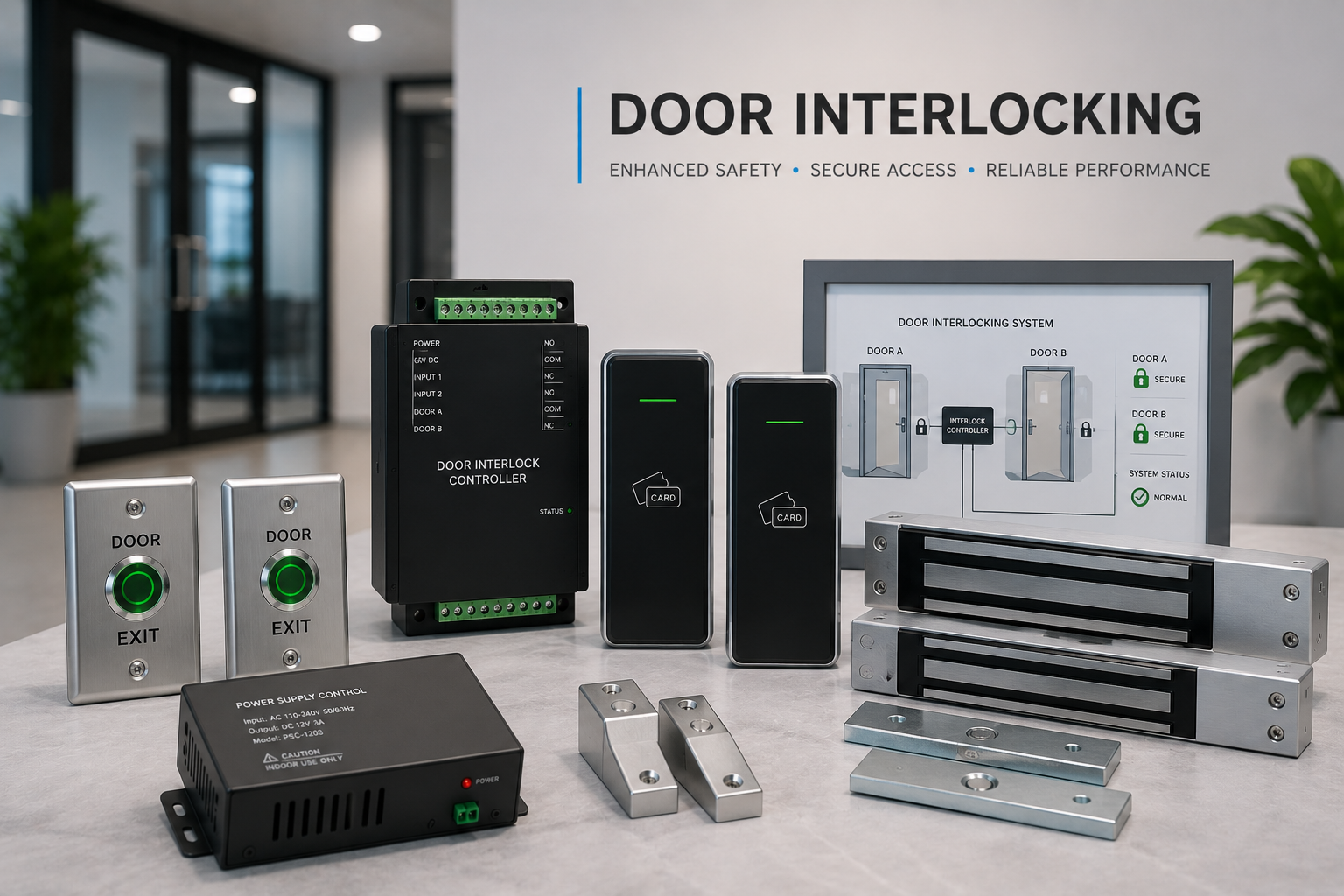
Key points
- Two- to eight-door (or more) interlock groups from one logic panel
- Mag-locks, strikes, and sensors with door-position monitoring
- LED / buzzer status, emergency and fire inputs, BMS or AHU hooks
- Site-configurable matrices, timed release, and supervised override
Safety and compliance
- Emergency release and fire strategies defined with your authority having jurisdiction
- Clear indication of normal, waiting, fault, and override states at the opening
- Testing and witness documentation for validation-driven environments
Delivery focus
- Traffic and pressure-balance review before final interlock table sign-off
- Coordinated cable containment with access, CCTV, and cleanroom finishes
- Operator training on everyday use and what to do when a door refuses release